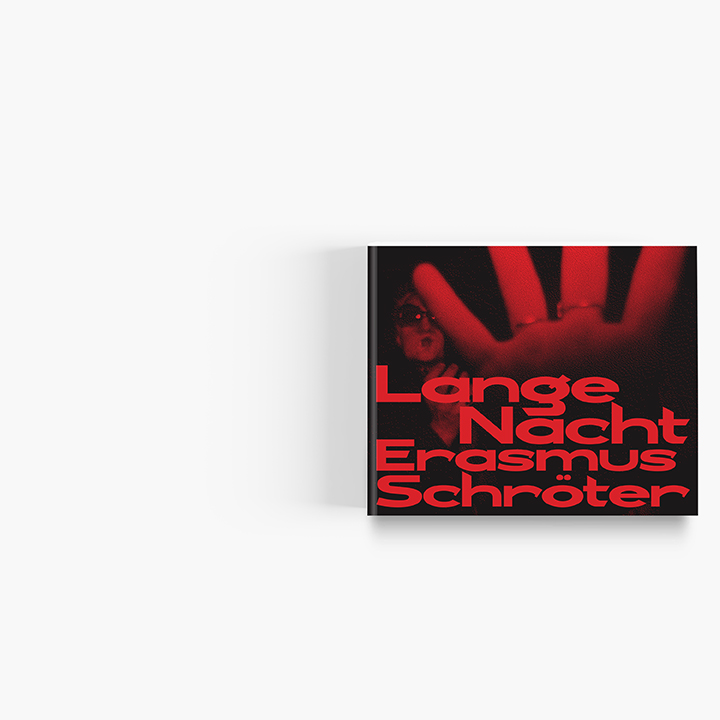
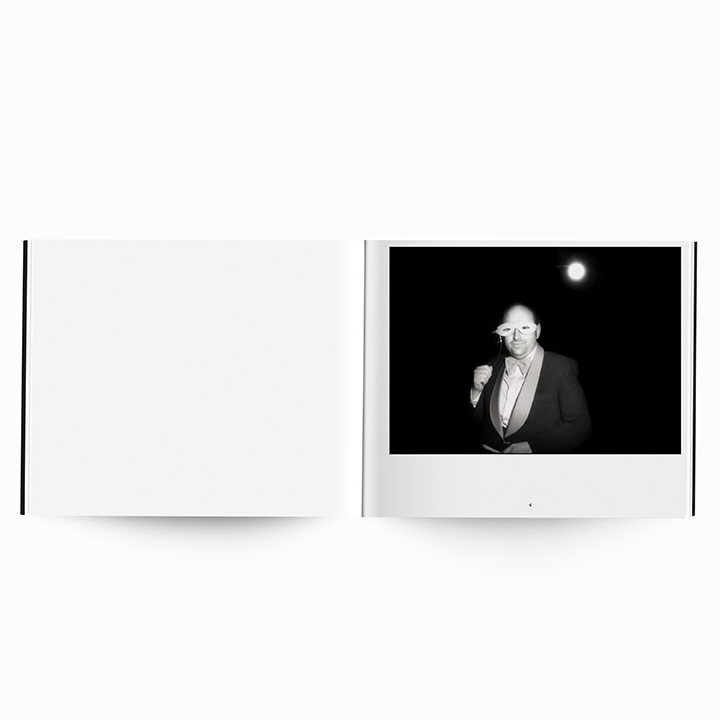
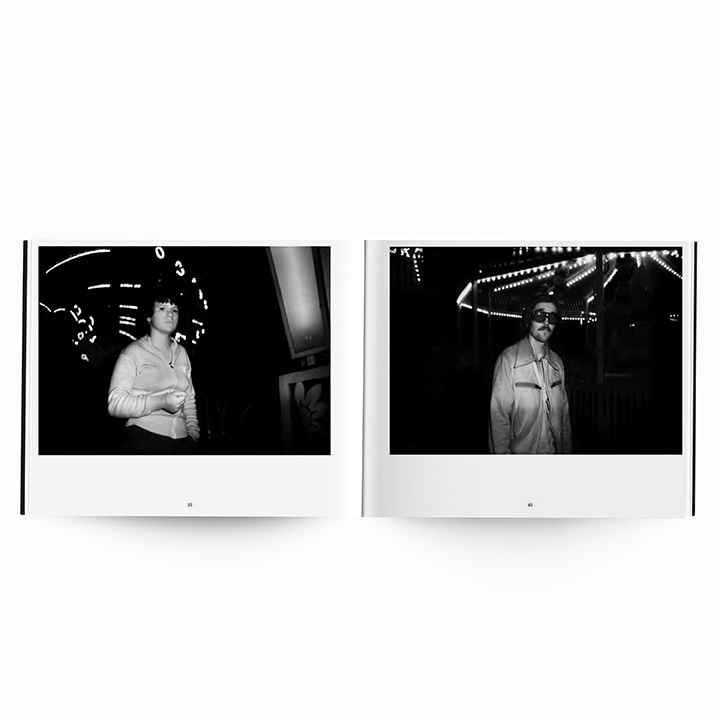
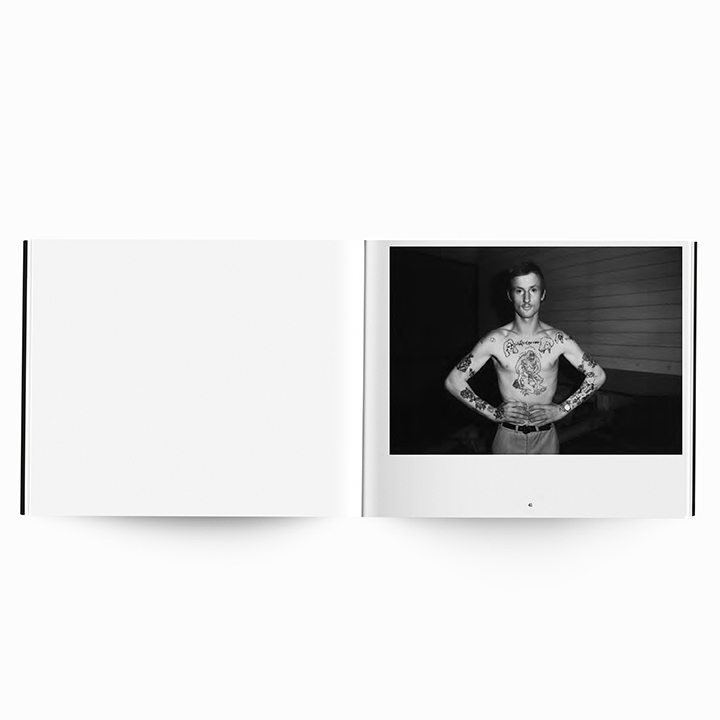
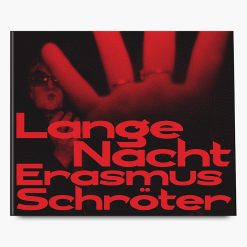
“I had only two copies of the original book “Nachts” left. It was published in 1982 in a limited edition of 100 copies, printed and bound at the Academy of Visual Arts in Leipzig (HGB). For me, the photographs taken between 1980 and 1981 are among the best and most impressive images that Erasmus—then still a very young man—ever took,“ says his wife Annette Schröter. Erasmus Schröter took the pictures for this book on infrared film using the so-called ”black flash method.” It was never clarified how he was able to obtain this film material at the time, but he was fascinated by the possibilities of this technique and used it intensively on his excursions into the nightlife of the GDR, mainly in Leipzig. The images show people waiting, ball and opera goers, lovers, dancers, tattooed men at fairs, circus people, and artists’ festivals. The images—transcendent and blurred—create the atmosphere of a surreal theater. “Lange Nacht” shows how technical experimentation and documentary photography can create new visual levels and is also a reminder of the early artistic work of the great photographer Erasmus Schröter.
Erasmus Schröter (1956–2021) left the GDR in 1985 in protest and only returned to his hometown of Leipzig in the 1990s. In addition to his profession as a photographer, he was also a passionate collector of GDR children’s toys and GDR architecture postcards. He repeatedly incorporated both into his works and exhibitions. What is fascinating about his pictures is that they combine everyday culture with an incredibly strong aesthetic appeal.